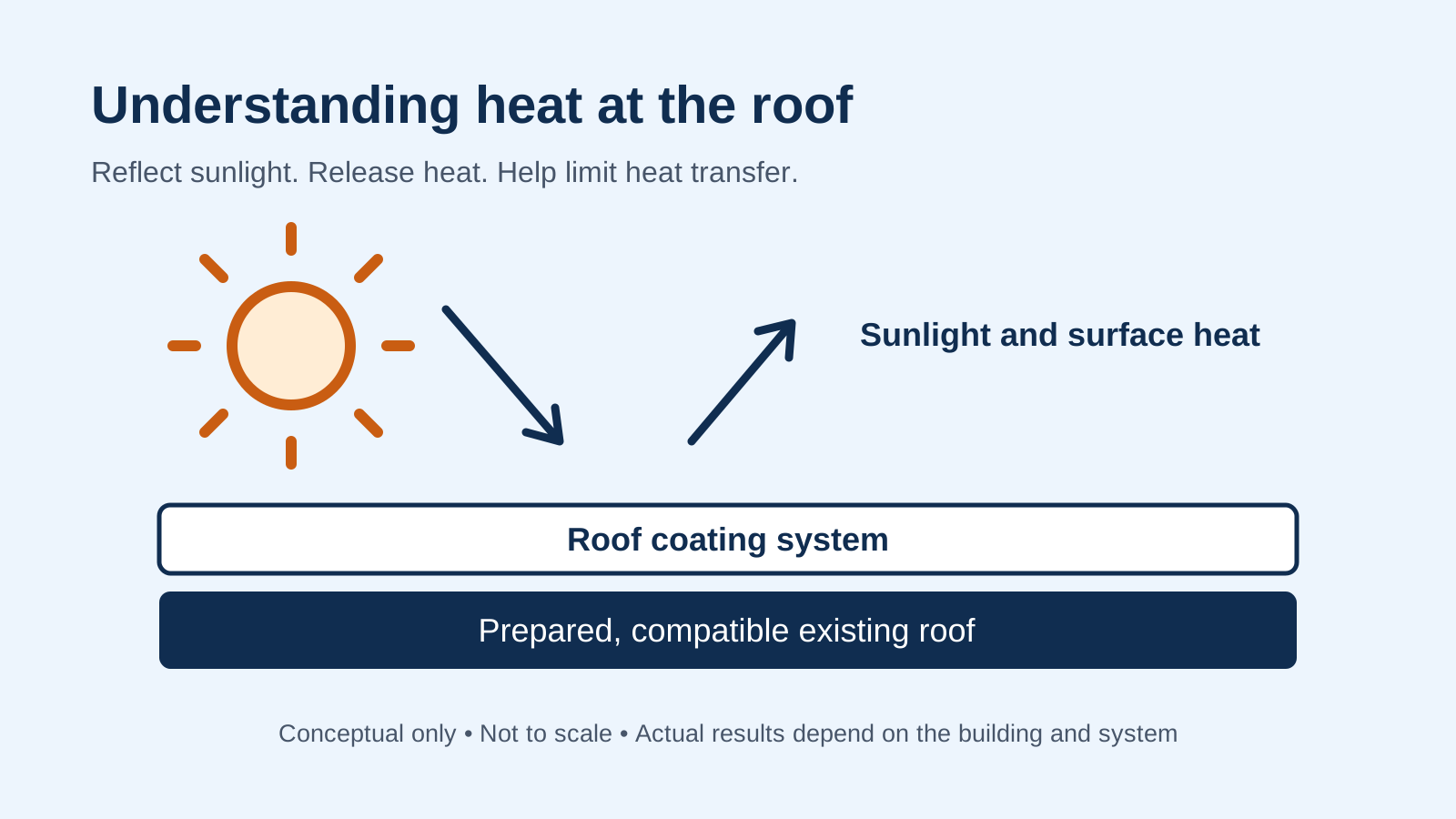
Cool roofs use solar reflectance to send sunlight away and thermal emittance to release absorbed heat. They may reduce roof heat gain and cooling demand, but surface-temperature changes do not translate directly into a fixed reduction in electricity use. Building design, insulation, HVAC operation, weather and roof condition affect the result.
Key Takeaways
- Solar reflectance and thermal emittance describe different surface properties.
- SRI combines these properties under stated conditions; project requirements determine the appropriate rating.
- Roof temperature, heat transfer, cooling energy and total utility cost are different measurements.
- Potential service-life and energy benefits depend on the actual roof and installation.
- Verify current product listings, aged ratings and any incentive eligibility rather than assuming certification or a rebate.
Why Traditional Roofs Get So Hot
Roof surfaces absorb some incoming sunlight and convert it into heat. Dark surfaces often absorb more than reflective ones, but the exact amount depends on the material and condition. Heat movement through the assembly also depends on insulation and construction.
A hot roof can add to a building's cooling demand. A surface-temperature reading alone does not measure how much additional electricity the HVAC system uses.
The Two Numbers That Matter: Reflectance and Emittance
- Solar Reflectance (SR): The fraction of sunlight a surface reflects. Review the specific product's current initial and aged rating rather than assigning one reflectance value to every white coating.
- Thermal Emittance (TE): How efficiently a surface releases absorbed heat as infrared radiation. This is different from reflecting incoming sunlight.
- Solar Reflectance Index (SRI): An index combining reflectance and emittance under defined conditions. Applicable project requirements determine what rating is needed; one threshold does not fit every assembly.
What This Looks Like in Houston
Houston's sun and cooling demand can make reflective roofing worth evaluating, particularly on compatible commercial roofs. The starting roof, insulation, shading, weather and operating hours all affect the opportunity.
A credible energy estimate should identify its assumptions and measurement method. Before-and-after photos or a single surface-temperature comparison do not establish a universal percentage saving for Texas buildings.
Beyond Energy: The Longevity Bonus
Thermal cycling contributes to roof wear alongside UV exposure, moisture, detailing and other factors. A suitable coating may help protect an eligible assembly, but no fixed extension of roof life follows automatically. Condition, preparation and ongoing care remain important.
Are Cool Roofs Right for Every Building?
- Potential candidates: Compatible commercial, metal and low-slope roofs where the assembly is sound and roof heat gain is worth addressing. Standard asphalt shingles are not automatic coating candidates.
- Evaluate the whole building: Cooling and heating demand, insulation, roof condition and operating patterns affect the value. Climate alone does not establish the benefit for every property.
- Not a fit: Roofs with active leaks, structural damage, or saturated insulation — fix those first.
Frequently Asked Questions
Need Help With Your Houston Roof?
Free inspection. No high-pressure sales. Honest answers from local roofers.
Roofing Services Across Greater Houston
ARC Roofing Services serves homeowners and businesses across the entire Houston metro. Find your area: