NanoTech's Cool Roof Coat is a water-based acrylic roof coating designed to protect compatible roof surfaces and help reduce heat transfer. Its reflective properties and Insulative Ceramic Particle technology are part of the thermal-performance approach. It can be worth considering for a sound commercial or metal roof, but it is not a cure for wet insulation, failing decking or unresolved drainage. The building, preparation and specified system determine whether restoration makes sense.
Key Takeaways
- Reflecting sunlight, releasing absorbed heat and limiting heat transfer are related—but different—parts of roof thermal performance.
- A suitable existing roof may be restored instead of automatically torn off; substrate compatibility and condition come first.
- Retail, office, warehouse and metal-roof properties are useful assessment scenarios, not automatic coating approvals.
- A topcoat does not replace leak repairs, moisture checks, adhesion testing or drainage work.
- Energy savings, lifespan, cost and warranty coverage must be evaluated for the actual building and proposed system.
What is NanoTech roof coating?
NanoTech Materials, ARC's coating partner, makes several different coating systems. Its roofing range includes Cool Roof Coat, a water-based acrylic coating, along with preparation, sealing and other system components. This guide focuses on roofing—not the company's separate industrial insulation or fire-protection products.
Think of the coating as part of a restoration system over an eligible existing roof. It is not ordinary house paint, a structural repair or a new layer of conventional bulk insulation. Choosing the finish is only one part of the decision; what sits underneath it matters just as much.
How does it work? Three ideas in plain English
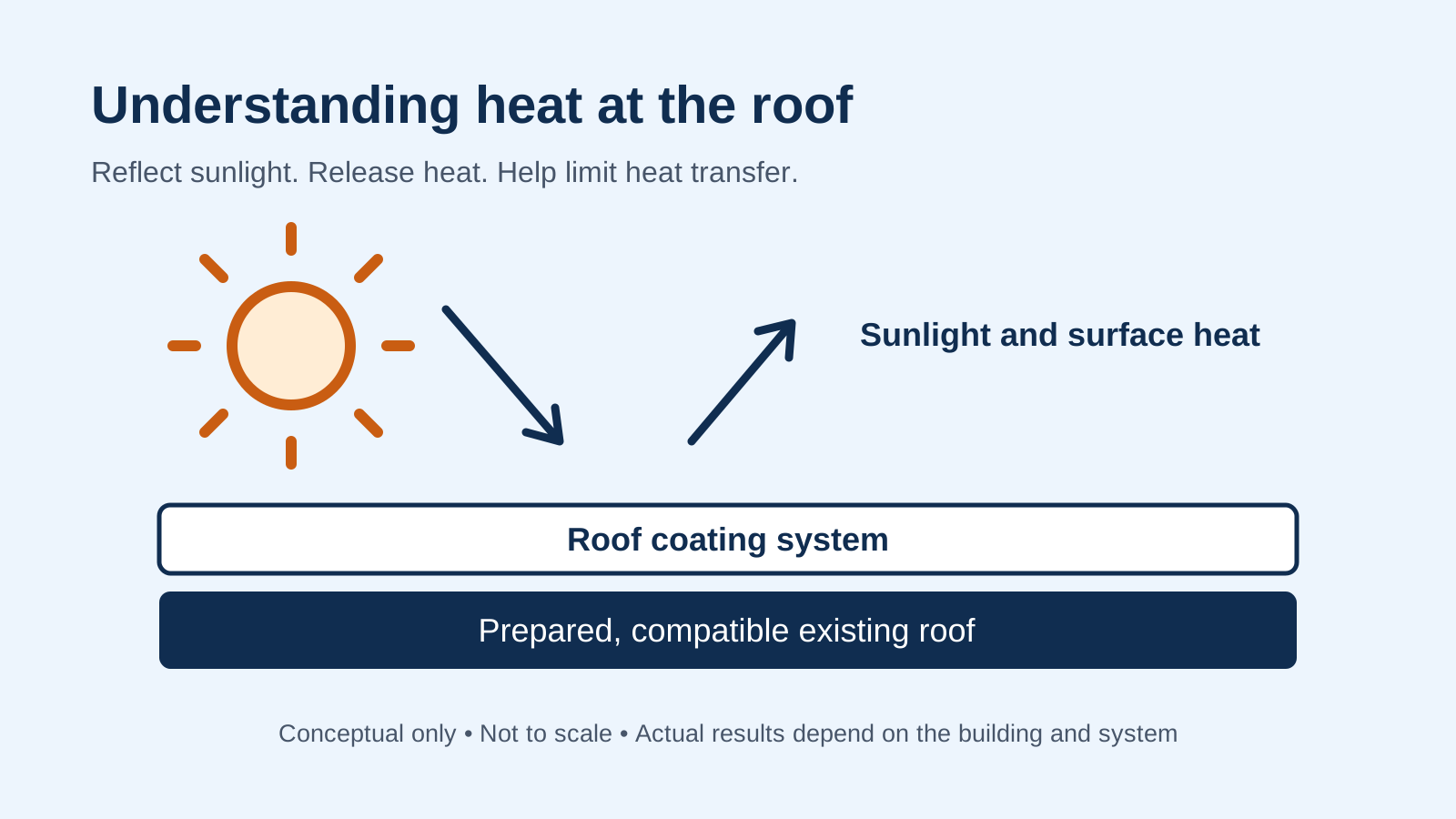
- Solar reflectance: A reflective surface sends a portion of incoming sunlight away rather than absorbing it. That can reduce the solar heat added to the roof.
- Thermal emissivity: A surface can release absorbed heat as thermal radiation. Emissivity describes that ability; it is not the same thing as reflecting sunlight.
- Heat transfer through the coating: NanoTech describes its Insulative Ceramic Particle technology as helping reduce heat transfer through the coating film. The manufacturer's technical information identifies reflectance, emissivity and low thermal conductivity as contributors to performance.
Does a cooler roof mean a lower electricity bill?
It may help reduce cooling demand, but roof-surface temperature, heat entering the building, HVAC energy and the total utility bill are different measurements. A dramatic surface-temperature photograph does not establish a matching percentage reduction in building energy use.
Existing insulation, roof construction, conditioned space, HVAC efficiency, operating hours, weather and utility rates all affect the result. An unconditioned warehouse and a continuously air-conditioned retail store should not be expected to show identical financial benefits. Ask what assumptions support any proposed energy estimate and how results would be measured.
Where can a NanoTech roof system be useful?
- Retail centers and occupied commercial buildings: A sound existing roof may be a restoration candidate when the owner wants to compare coating with replacement. Access, tenant operations, preparation and weather still need a project-specific plan; zero disruption is not automatic.
- Offices and conditioned workspaces: Roof heat gain can be part of the cooling-load conversation. Compare the roof condition and thermal opportunity with other building needs rather than assuming coating is the largest available energy improvement.
- Warehouses and light-industrial buildings: A broad roof area makes roof condition and solar exposure worth evaluating. Whether the space is conditioned matters when discussing cooling savings or occupant comfort.
- Existing metal roofs: Compatible metal roofs may be assessed for restoration, including the condition of panels, fasteners, seams, ridge details and corrosion. Coating does not restore structural strength to deteriorated metal.
- Eligible low-slope membrane roofs: NanoTech's manual includes TPO, PVC, EPDM and modified-bitumen systems, as well as structural concrete. Each needs the appropriate preparation and specification. A listed substrate is not blanket approval for every roof of that type.
When is coating a good option—and when is it not?
Coating is worth investigating when the underlying roof is sound, moisture is understood, drainage is adequate and compatibility can be demonstrated. Localized defects may be repairable before restoration; widespread failure can change the recommendation entirely.
- Investigate first: Unknown leak paths, wet insulation, loose membranes, corrosion, prior coatings or questionable adhesion need evaluation before a coating scope is selected.
- Correct the underlying problem: A failing deck, structural deterioration or persistent drainage problems are not solved by applying a reflective finish. Wet materials may need removal and replacement.
- Compare replacement honestly: If the remaining assembly cannot support a reliable restoration, repair or replacement may be the better investment. The lowest initial coating price is not automatically the lowest lifecycle cost.
Why preparation matters more than the white finish
NanoTech's technical manual calls for confirming compatibility and adhesion, evaluating moisture, correcting unsuitable conditions and maintaining drainage. The visible topcoat is the end of that sequence, not a shortcut around it.
- Inspect: Identify the roof type, prior materials, details, drainage and evidence of deterioration or moisture. Determine whether a moisture survey or other investigation is appropriate.
- Test and specify: Confirm adhesion and compatibility using the manufacturer's required checks. Select the preparation, primers where needed, repair materials and coating system for that roof.
- Repair and prepare: Address wet or defective materials and details, clean the roof and provide a suitable application surface. A coating is not a substitute for finding and correcting leaks.
- Apply and maintain: Follow the specified coverage, film thickness, cure conditions and weather limits. After installation, maintain drainage and inspect and repair the system as required.
What our local project photos can—and cannot—tell you
ARC's Houston retail-building project shows the existing metal roof and a white NanoTech-coated area afterward. Our Tomball commercial-building photos show a metal roof before coating and the coated roof view. They are useful examples of the kind of work being discussed, photographed from different viewpoints—not laboratory comparisons.
The photos do not establish a measured energy reduction, leak-test result, warranty term or exact product used on the Tomball job. Those details require project records. A visible change in finish is not a substitute for a documented specification and installation checks.
- Houston retail building: before and coated-area photos
- Tomball commercial building: before and after photos
What about tanks, boilers and fire protection?
NanoTech has separate product systems for industrial insulation and fire-protection applications. The correct product, substrate, service temperature, testing and installation requirements differ. A roofing product's performance cannot be used to claim safe-touch temperatures, equipment-insulation performance or fire resistance. Treat those as separate technical assessments, not extra benefits automatically included with a roof coating.
Questions to ask before approving a coating proposal
A fixed lifespan, percentage savings or warranty term should not be assumed for every roof. Start with the condition of your building and a defined scope. ARC can discuss a roof evaluation and the coating options that may be appropriate for your Greater Houston property.
- Why is this existing roof suitable for restoration, and what condition or moisture checks support that conclusion?
- Which products and components are specified, what repairs are included, and what installed thickness is required?
- How will drainage, access, weather and the building's operations affect the work?
- What supports any projected savings, and how does the scope compare with repair or replacement?
- What does the written product warranty cover, what workmanship coverage is separate, and what exclusions and maintenance requirements apply?
Manufacturer sources and further reading
This guide draws on NanoTech Materials' current product information and application guidance. Specifications can change; the current documents and the approved project scope govern material selection and installation. ARC is the contact for your roof inquiry and proposal.
Frequently Asked Questions
Need Help With Your Houston Roof?
Free inspection. No high-pressure sales. Honest answers from local roofers.
Roofing Services Across Greater Houston
ARC Roofing Services serves homeowners and businesses across the entire Houston metro. Find your area: